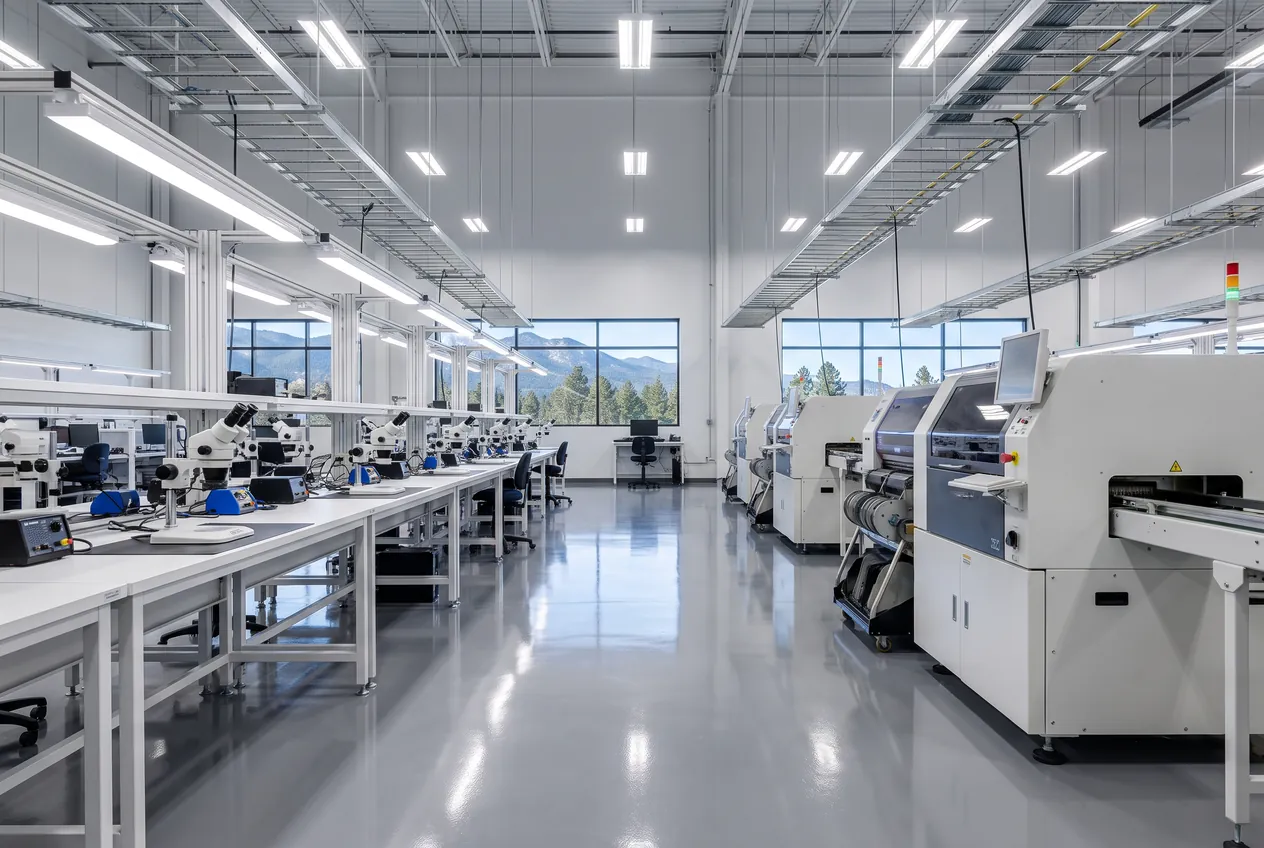
Production floors take the most effort. Oil, coolant, grease and metal fines spread from machines into walkways, and a plain mop only smears them around. Crews apply a degreaser, give it time to work, then scrub with an auto scrubber or floor machine and pick up the solution so no slick film stays behind. Around equipment, the crew wipes guards, panels and machine exteriors and cleans the floor at the base where drips collect. Anything inside guards, on moving parts or still powered is left to maintenance staff working under the plant's lockout/tagout procedure.
Plants that produce fine dust need it kept off ledges, beams, conduit, ducts and light fixtures. Letting it build up overhead is a safety concern as well as an appearance problem, so high cleaning is planned on a regular cycle, with work at height done by trained operators. The support spaces matter as much as the floor. Break rooms, locker rooms, restrooms and offices see heavy use across several shifts and need daily janitorial cleaning, restocking and trash removal, along with floor care that keeps grime from the production side out of them.
Be clear about where commercial cleaning ends. Hazardous waste handling, chemical spill response, tank cleaning and hydroblasting are specialist industrial services with their own training and equipment, and a janitorial crew should not take them on. Expect the crew to complete site safety orientation and wear the PPE each area requires. Common mistakes include scheduling a deep clean during production instead of a planned shutdown, using a degreaser that leaves residue on the floor, and having no written list of machines and areas the crew must never touch.
Plant cleaning in the Colorado Springs climate
Dry, windy weather along the Front Range carries outside dust in through bay doors and air intakes, where it mixes with process dust already inside the plant. On beams, ledges and fixtures above the production floor, that combined layer builds faster than many facility teams expect. Winter storms in the Pikes Peak region bring their own mess: snow, slush and ice melt come in at shipping doors and staff entrances, then mix with oil and coolant on the floor into a slippery film. Plants that do work for defense contractors also tend to keep access rules that the cleaning crew must follow.
Most plants schedule routine cleaning between shifts or during the slowest one, and save deeper floor degreasing and high cleaning for planned shutdowns and holiday breaks. Facilities running several shifts may book a day porter to keep break rooms and restrooms in order while production continues. Requests tend to come from the Powers Corridor, Northgate, Fountain and Security-Widefield. If your plant uses badges, escorts or background checks, say so when you ask for a quote.
Sample industrial cleaning schedule
| Task | Frequency |
|---|---|
| Break rooms, locker rooms and restrooms | Daily or each shift |
| Production floor sweeping and spot degreasing | Daily to several times a week |
| Auto scrubbing and degreasing of floors | Weekly, or as production allows |
| Machine exterior and guard wipe-downs | Weekly, on idle equipment |
| Offices and control rooms | Several times a week |
| High cleaning of beams, ledges and fixtures | Every 3 to 6 months |
| Deep floor clean and full reset | During planned shutdowns |
Consider this an outline rather than a commitment. After a walkthrough, and once they understand how each area is used, the provider will adjust it.
What the work usually covers
- Production floor degreasing and scrubbing
- Oil, coolant and metal fines cleanup
- Machine exterior and guard wipe-downs
- Dust removal from ledges, beams and fixtures
- Break rooms and locker rooms
- Restrooms cleaned and restocked
- Offices and control rooms
- Shutdown deep cleans by arrangement
The specific tasks, and how often they happen, are agreed with the provider during the quote.
What drives the price of industrial cleaning
- Soil type and amount
- Light dust is quicker to clear than heavy oil, coolant and metal fines, which need degreasers, dwell time and more machine passes before the floor is safe and clean.
- Shifts and shutdowns
- Plants with a predictable gap between shifts are simpler to schedule than nonstop operations, and work packed into a short shutdown may need a larger crew.
- Height and access
- Cleaning beams, ducts and fixtures overhead requires lifts and trained operators, and areas with tight clearances, guarding or escort rules add time to every visit.
- Safety requirements
- Site orientation, specialized PPE, permits for certain areas and coordination with maintenance for locked-out equipment all add hours that a basic janitorial quote would not include.
Related services in Colorado Springs
- Floor Care in Colorado Springs
- Janitorial Services in Colorado Springs
- Day Porter Services in Colorado Springs
Cleaning for other types of business in Colorado Springs
- Restaurant Cleaning in Colorado Springs
- Church Cleaning in Colorado Springs
- School and Daycare Cleaning in Colorado Springs
- Warehouse Cleaning in Colorado Springs
Service area
Businesses throughout Colorado Springs send us industrial cleaning requests, from Downtown Colorado Springs, Briargate, Northgate, Powers Corridor, Old Colorado City, Manitou Springs and beyond. See all areas.