Day porter versus the night crew
The two roles do different jobs and most buildings that use a porter keep both. The night crew does the full reset when nobody is in the way: vacuuming every office, mopping, detailed restroom cleaning and floor work. The porter keeps things in order through the day, when people are using restrooms, spilling coffee and tracking in weather. Adding a porter changes when some work happens, while the evening crew still carries the heavy cleaning.
| Point | Day porter | Night janitorial crew |
|---|---|---|
| When they work | During business hours, while the building is occupied | After hours, once staff have left |
| Main purpose | Keep shared areas usable and presentable all day | Reset the whole building to a clean baseline |
| Type of work | Rounds, restocking, spills, quick resets | Full vacuuming, mopping, restroom detail, trash from every room |
| Visibility | Seen by staff and visitors, often a point of contact | Rarely seen, judged by how the building looks in the morning |
| Typical staffing | One person or a small number on a fixed shift | A crew sized to finish the building in the time window |
Day porter duties and job description
A clear duty list is the job description, and it also becomes the standard the porter is measured against. The items below cover what most commercial buildings expect. Not every building needs all of them, and some add tasks of their own, such as watering lobby plants or checking a loading entrance after deliveries.
What separates a good porter from a person who simply walks around is the round. Restrooms, the lobby and break rooms are visited in a set order at set points in the day, rather than only when someone complains, so problems are caught before a tenant or visitor finds them.
- Restroom checks on a set round, restocking paper, soap and liners
- Lobby and entrance upkeep, including floors and entry mats
- Responding to spills and messes as they are reported
- Emptying trash and recycling in shared areas as bins fill
- Resetting conference rooms between meetings
- Tidying break rooms and kitchens after busy periods
- Wiping touch points such as handles, buttons and railings
- Cleaning glass doors and elevator cabs and panels
- Reporting maintenance issues like leaks or broken fixtures
Buildings that get the most from a porter
Day porters make the most sense where many people pass through the same shared spaces during the day. Multi-tenant office buildings use them because the lobby, elevators and common restrooms belong to everyone and nobody else is responsible for them. Medical buildings use them because waiting rooms and patient restrooms need attention between appointments, not only at night.
Busy retail and buildings that host a lot of visitors also benefit, since the first impression happens at the door during open hours. A single-tenant office with a modest headcount may not need a porter every day, and could instead book coverage on its heaviest days or for a block of hours around lunch.
Choosing full-day or part-day coverage
Porter shifts are booked as full-day or part-day coverage. A full shift suits buildings where traffic is steady from opening to close, such as a medical office building or a large multi-tenant property. A part-day shift placed around the busiest hours often covers what matters for smaller offices, since restrooms and break rooms see most of their use around midday.
Look at when complaints actually come in. If restrooms run out of paper in the afternoon and the break room is a mess after lunch, a shift that runs from late morning through mid-afternoon may cover the problem. Some buildings add porter days only during events, peak seasons or bad weather.
Day porters in Colorado Springs buildings
Several parts of the Colorado Springs economy fit the porter model well. Clinics and medical offices across El Paso County have waiting areas and restrooms in use all day, and professional offices and nonprofits in shared buildings rely on clean common areas they do not control themselves. Offices that serve defense or government clients often have badge or escort rules, so a porter who works there daily may need to be cleared and known to the front desk.
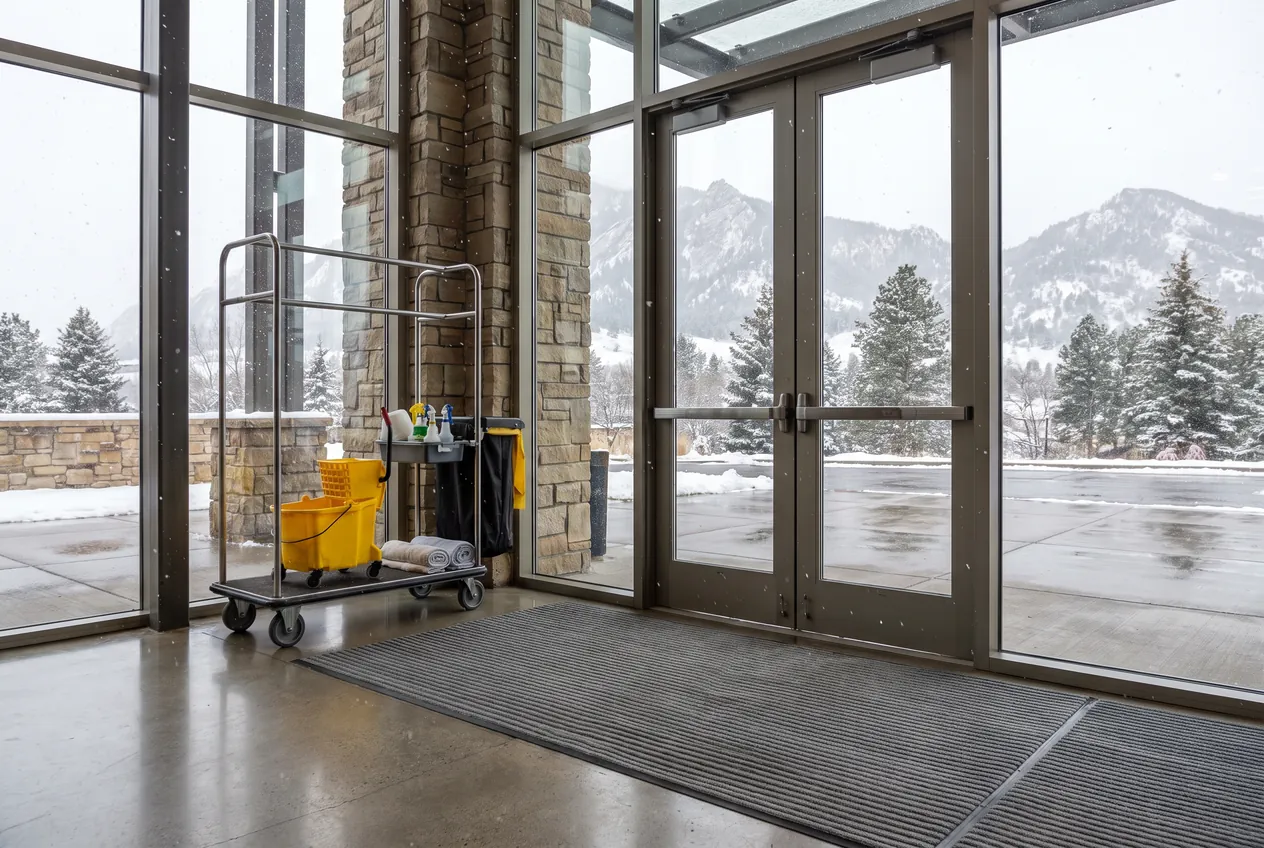
Weather shapes the porter's day here. Winter storms send snow and ice melt through the main doors, and a porter who mops the entrance and lays out dry mats through the morning keeps the lobby safer. On dry, windy days, fine dust gathers on entrance glass, reception counters and electronics, so a porter round that includes those surfaces keeps them looking cared for.
Keeping the porter accountable
Daytime work is easy to lose track of, which is why a written round schedule matters. The schedule lists each area, the order of the round and the times it is checked. A simple log, on paper in a restroom or on a phone, records each check and any problem found, so the building manager can see what was done instead of relying on memory.
Give the porter one contact person for requests. When everyone in the building sends tasks directly, the round falls apart and the porter ends up moving furniture while restrooms go unchecked. Review the log together after the first few weeks and adjust the round to where the work actually is.