Agree on the scope before anyone picks up a cloth
Most disputes on a construction cleanup come from assumptions, not from poor work. The general contractor expects the cleaners to handle something, the cleaners expect the contractor to handle it, and the tenant finds out on move-in day. A short written split of duties, signed off by the contractor, the building and the cleaning company, prevents nearly all of it.
Debris haul-off and dumpsters normally belong to the general contractor, not the cleaning crew. Swapping HVAC filters after the dust settles is a call for the mechanical contractor or the building, so do not assume the cleaners will do it. Settle both in writing, along with the practical details the crew needs to work at all.
- Who removes leftover debris, scrap and packaging, and where the dumpster sits
- Whether power and running water are live on every floor being cleaned
- Which entrance, elevator and loading area the crew may use
- Working hours, including whether evenings or weekends are allowed
- Site safety rules: hard hats, vests, sign-in sheets or a site orientation
- Who changes HVAC filters once the cleaning is done
- Which areas are still active work zones and off limits
The three passes and what each one covers
Treating post-construction cleaning as one visit is the most common planning mistake. Dust keeps falling for as long as trades are cutting, sanding and running ducts, so a single clean done too early gets undone within days. Splitting the work into passes lets each one happen at the point where it actually sticks.
| Pass | When it happens | Main work |
|---|---|---|
| Rough clean | After framing, drywall and heavy trades wrap up | Bulk dust and scrap removed, floors swept and vacuumed, large spills and overspray dealt with |
| Final clean | Before inspection, turnover or the owner walkthrough | Top-to-bottom detail of every surface, fixtures, glass, cabinets, restrooms and floors |
| Touch-up clean | Shortly before furniture and staff arrive | Dust that resettled, fingerprints, floor marks left by installers, restroom restock check |
Final clean checklist, working top to bottom
Gravity sets the order. Anything cleaned near the floor before the ceiling grid, light fixtures and ledges are done will be covered again as the crew works upward, so the final clean starts high and finishes with the floor. The list below follows that sequence and covers the places inspectors and new occupants tend to notice first.
Cabinet interiors and drawer tracks get missed more than anything else because they look clean from across the room. Open every door and drawer during the final clean, including those in break rooms, restrooms and reception counters, and wipe the inside surfaces and hinges.
- Ceiling vents, return grilles and diffuser faces vacuumed and wiped
- Light fixtures, lenses and exit signs dusted inside and out
- Tops of door frames, ledges, sills and window tracks cleaned
- Walls spot cleaned for scuffs, drips and fingerprints
- Cabinet interiors, shelves and drawer runners wiped
- Switch plates, outlet covers and door hardware wiped
- Restroom fixtures, partitions and mirrors cleaned and labels removed
- Interior glass, door glass and frames cleaned
- Baseboards and corners vacuumed, then damp wiped
- Floors cleaned last, using the method that suits each finish
Why dry dusting fails on construction dust
Drywall sanding and concrete cutting produce dust far finer than everyday office dust. A feather duster or dry cloth lifts it into the air, where it drifts for a while and lands back on the surfaces the crew just finished. That is why a room can look fine at the end of a cleaning shift and gray again the next morning.
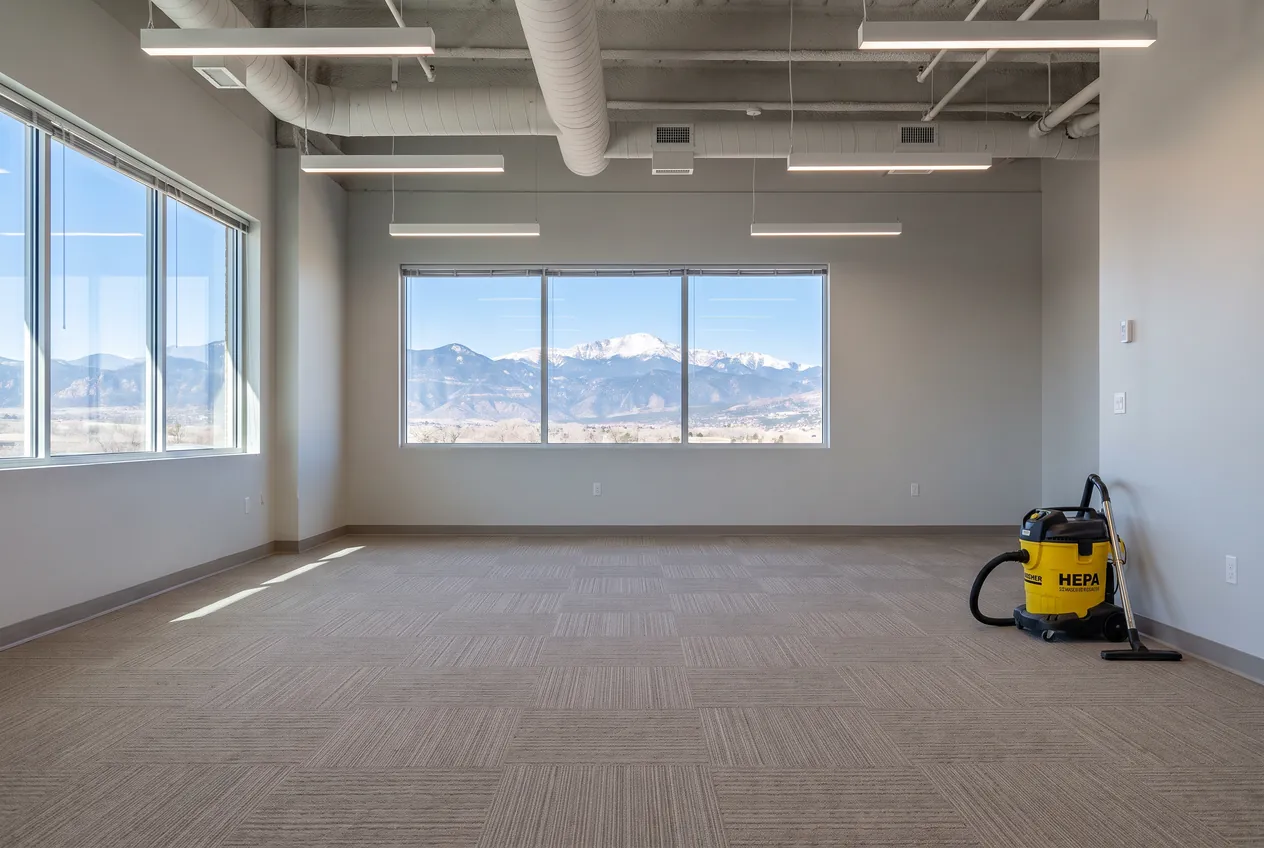
Crews that do this work well capture the dust instead of moving it. HEPA-filtered vacuums pull it out of vents, tracks and carpet, and damp microfiber cloths trap what is left on hard surfaces. Wiping with a slightly damp cloth, then going over the same surface again, removes the faint haze a single pass leaves behind.
Construction cleanup along the Front Range
The dry, windy air in Colorado Springs adds a layer on top of the construction dust. Doors propped open for deliveries let outside dust blow in, and in a space without finished seals or closed-up openings it settles on glass and ledges quickly. Scheduling the final clean after exterior doors and windows are installed and kept shut gives it a much better chance of lasting until move-in.
Projects that run into winter bring snow, grit and ice melt through the main entrance on every boot. That grit scratches new hard floors and fresh finish before the tenant ever sees them, so ask the general contractor about temporary floor protection and entrance mats during the build. Buildings that serve defense or government clients may also need badge or escort arrangements for the cleaning crew, which can take time to set up.
Glass, metal and new floor finishes
Stickers, labels and protective film come off every new window, appliance, fixture and stainless panel. Paint flecks and adhesive drips need the right scraper and remover for the surface: a blade that is safe on plain glass can mark coated glass, and solvents that lift adhesive can haze some metals and plastics. A careful crew checks the manufacturer's care guidance before using anything aggressive on new finishes.
Floors are cleaned for what they are. New resilient tile may need floor finish applied before it goes into service, sealed concrete wants a neutral cleaner and no harsh chemicals, and new carpet usually needs a thorough vacuum to pull out construction dust and loose fibers. Confirm with the flooring installer whether any floor has a cure time or care rule before the crew starts.
The walkthrough and punch list
Walk the space with the general contractor and the cleaning company together, using the punch list as the guide. Separate items that are construction defects, such as chipped paint or a damaged door, from items that are cleaning misses, so each goes to the right party. Agree on a date for the cleaning corrections and do the touch-up pass only after the last trade fix is complete.